By: Rekha Ananthanpillai
Last Updated: 10/5/26 - 30 min Read
Key Takeaways:
- Draping is a technique, not a cultural costume — the sari's effect comes purely from fabric tension and geometry, not seams or structure, making it one of fashion's oldest engineering solutions.
- The slip dress shares the sari's core logic — both are built to move with the body via bias-cut or draped fabric, rather than being tailored around it.
- The two traditions are visibly converging — pre-draped sarees, cowl-back gowns, single-panel draped slip dresses, and dhoti-trouser pairings all borrow across both vocabularies.
- Draping and tailoring are the two fundamental approaches to dressing the body — every occasionwear tradition is really a different balance of the two, not separate aesthetic categories.
- The practical shift for dressing today — stop separating "traditional" from "Western" wardrobes, and start noticing which pieces work through structure vs. drape, mixing them deliberately.
There's a moment happening in occasionwear right now, and it's easy to miss if you're only looking at one wardrobe at a time. On one side: designers reinterpreting the sari's drape the pleat, the pallu, the fall of fabric across the body — into gowns and separates that don't read as "ethnic wear" in the old, siloed sense. On the other: the slip dress, once a slightly subversive '90s statement, now the default uniform of Western minimalism, quietly borrowing the same principles of bias-cut fabric skimming the body rather than fighting it.
These two traditions come from entirely different histories. But put them side by side, and you start to see they've been having the same conversation for a while just in different languages.
The Drape as Technology, Not Costume
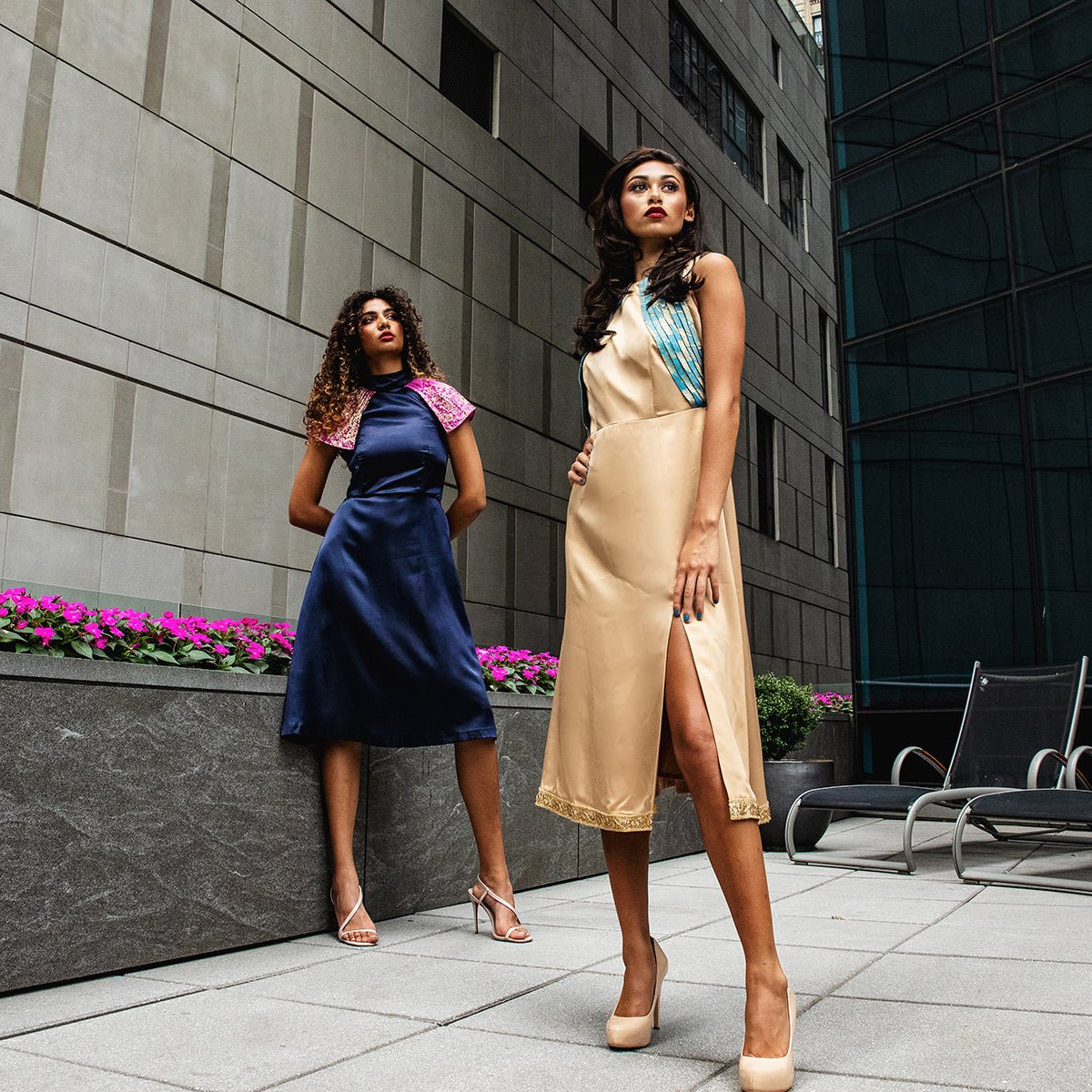
It's worth starting with what a sari actually does, technically, because that's the part that tends to get lost when draping gets called "ethnic" and filed away as separate from everything else. A sari is a single length of uncut fabric, and every part of its effect — the fall of the pallu over the shoulder, the vertical movement of the pleats, the way it skims rather than clings — comes from how it's tensioned and folded against the body, not from seams or structure. It's one of the oldest pieces of soft-engineering in fashion: no zippers, no boning, just fabric, gravity, and geometry doing the work.
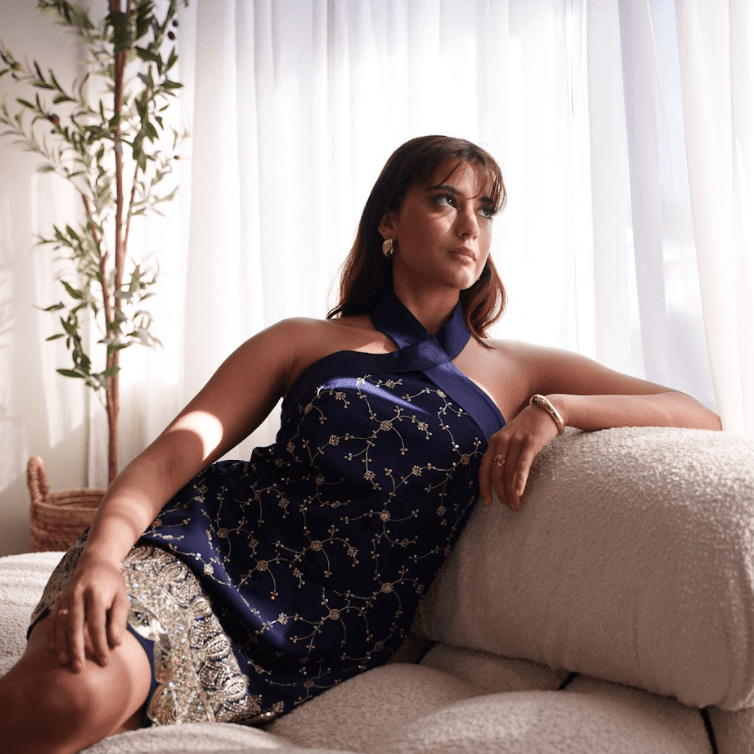
That's precisely the quality Western eveningwear has spent the last decade rediscovering. The rise of the cowl neckline, the asymmetric one-shoulder gown, the wrap silhouette that's become a red-carpet staple — all of it is drape doing the work that a fitted seam used to do. When a Western gown drapes rather than tailors, it's borrowing, even if unconsciously, from a technique the subcontinent has been refining for centuries.
The Slip Dress: Minimalism's Version of the Same Idea
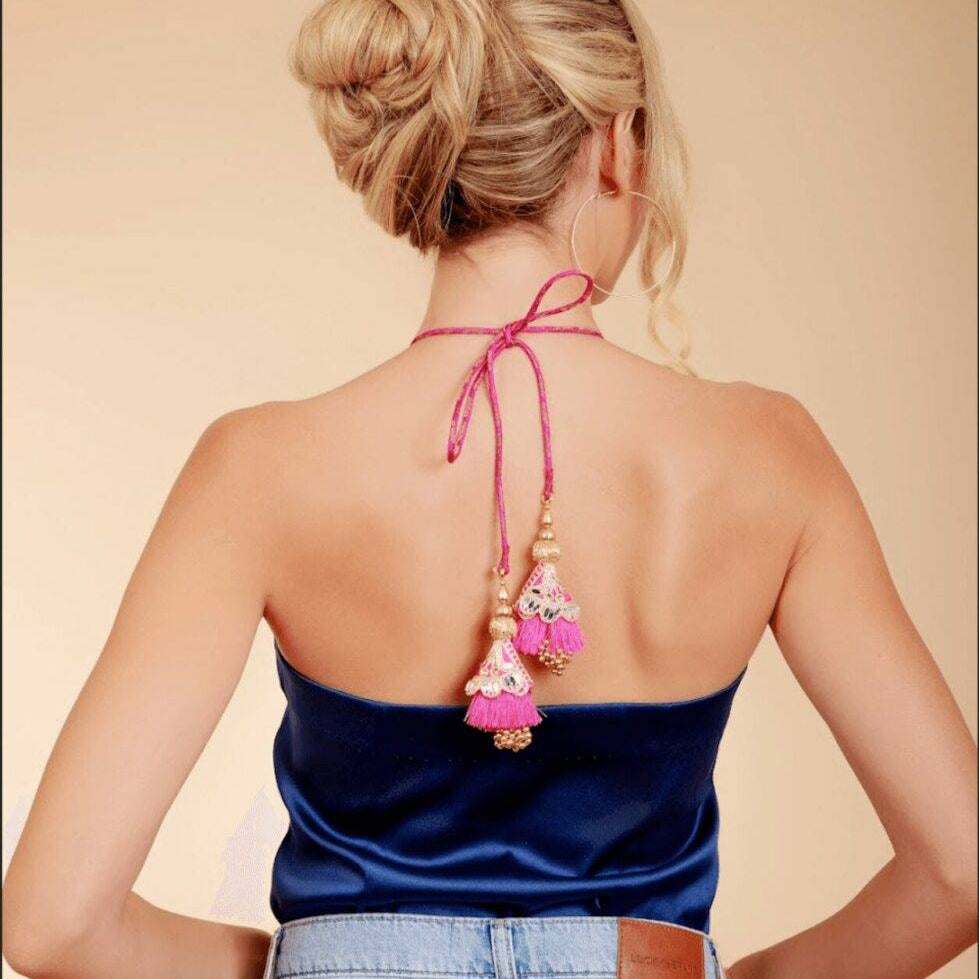
The slip dress feels like the opposite of a sari on the surface — spare where the sari is ornate, monochrome where the sari is often richly patterned, engineered to look almost accidental. But structurally, they share a core logic: both are built to be worn on the body rather than around it. A slip dress is cut on the bias specifically so the fabric moves with the wearer instead of holding a fixed shape. That's not a coincidence — it's the same physics as a well-draped pallu falling naturally across the shoulder.
What's changed is the vocabulary. The slip dress strips draping down to its most minimal expression: one bias-cut panel, no pleating, no layering. It's the drape technique translated into a completely different aesthetic register — quiet where the sari is expressive, but built on the same idea that fabric moving with the body reads as more sophisticated than fabric fighting it.
Where the Two Are Meeting in the Middle
This is where it gets interesting for anyone dressing for a modern occasion calendar that increasingly mixes both traditions in the same season, sometimes the same week. A few places the two languages are visibly merging:
- Pre-draped and stitched sarees — sarees engineered with the pleats and pallu already set into the garment, so the wearer steps into it the way she would a dress. This is drape borrowing the convenience logic of Western ready-to-wear.
- Slip dresses with a single draped panel or asymmetric fold — Western silhouettes borrowing the sari's one-shoulder or diagonal-pallu movement, translated into a single fabric panel rather than a full drape.
- Cowl-back gowns — a Western evening wear staple that is, structurally, a controlled drape at the back rather than the front, doing exactly what a pallu does, just relocated.
- Dhoti-style trousers paired with fitted, structured tops — traditional draping applied below the waist, styled the way a Western separates outfit would be styled above it.
None of these are costume mashups. They're the same underlying idea fabric tensioned against the body instead of cut and seamed around it showing up in two different design vocabularies that are increasingly talking to each other.
Why This Matters Beyond Aesthetics
There's a tendency to treat "traditional" and "Western" occasionwear as two separate closets that only meet at a fusion-wear label. But draping isn't a regional aesthetic choice sitting alongside tailoring as an alternative — it's one of the two fundamental approaches to dressing the body, the other being structured, seamed construction. Every occasionwear tradition on earth is really just a different balance of those two forces: how much is built, and how much is left to fabric and gravity.
Seen that way, the slip dress and the sari aren't opposites being awkwardly fused. They're two highly refined solutions to the same problem, arrived at by different cultures, on different timelines, for different reasons and they're finally being read side by side instead of in separate categories.
The Takeaway for How You Dress Now
If you're building out an occasionwear wardrobe today, the useful shift isn't picking a side between "traditional" and "Western." It's noticing which of your pieces work through structure and which work through drape — and starting to mix them deliberately. A draped, sari-inspired gown can sit next to a slip dress in the same closet, the same event calendar, even the same outfit, because they're speaking the same underlying design language. The new occasionwear isn't fusion for its own sake. It's two old techniques finally being recognized as dialects of the same idea.