By: Rekha Ananthanpillai
Last Updated: 7/23/26 - 15 min Read
Key Takeaways:
-
A strong fusion cocktail dress starts with a clean, modern silhouette, then uses South Asian details with restraint so the craft feels rooted rather than decorative.
-
Luxury shows up in how fabric, embroidery, and construction work together: polished materials, integrated handwork, and careful finishing create a dress worth wearing for years.
-
Choose the piece you can rewear with confidence; when craftsmanship shapes the cut and comfort is built in, the same dress works for wedding receptions, formal dinners, and city evenings.
Six million artisans. That is the scale of India's IndiaHandmade initiative — a deliberate effort to bring centuries of handloom and handicraft skill into global markets — and it quietly explains why the Indian fusion cocktail dress is having such a particular moment right now. Not because heritage is fashionable, but because women like Anjali have stopped settling for dresses that merely gesture at it.
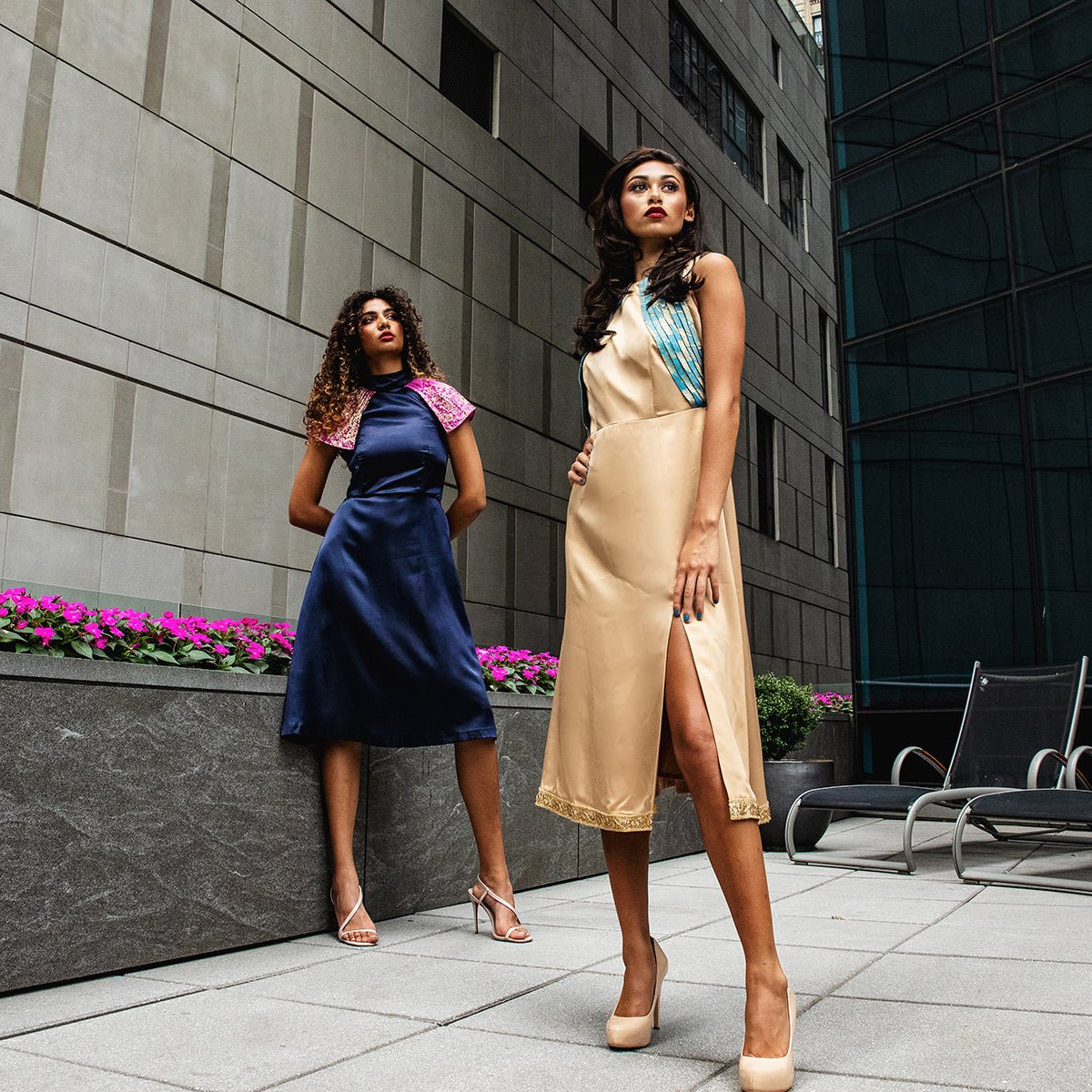
Anjali wants one dress for a gallery opening on Friday and a wedding reception on Saturday — one that feels right at both, not costumed at either. That brief is harder to meet than it looks. The difference between a fusion dress that earns that role and one that doesn't comes down less to how much embroidery it carries and more to whether that embroidery was designed as part of the dress or added to it afterward. La' Agra builds around the first approach: artisan handwork that follows the architecture of the cut, fabrics chosen for how they move through an evening, and silhouettes that carry South Asian heritage without narrowing where you wear the piece.
Choose a Silhouette That Feels Modern but Still Carries South Asian Detail
The question of what makes an Indian fusion cocktail dress feel genuinely rooted rather than decorative often comes down to one decision made before the embroidery thread is even chosen: the silhouette. Get that right, and the heritage details that follow will feel intentional. Overlook it, and even the finest handwork can read as an afterthought.
Let Contemporary Eveningwear Lead the Shape
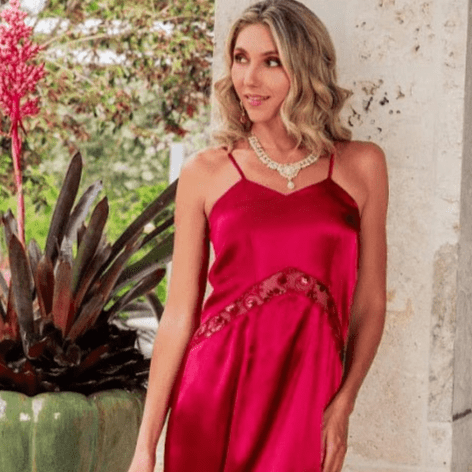
The strongest fusion silhouettes start from a modern foundation — a column dress, slip midi, draped A-line, or softly structured fit-and-flare — and then invite South Asian detail in. Think of the silhouette as the sentence and the heritage work as the cadence. La' Agra's Slip Dress does this precisely: a clean satin midi shape carries hand-made lace and beadwork without the cut ever feeling weighed down.
Fit and Movement Matter More Than Volume
A well-fitted dress with a defined waist and fluid hem reads as eveningwear anywhere. Heavy layering or overwrought draping, by contrast, can tip a piece toward costume. Clean necklines and shapes that allow natural movement keep things refined. As embroidery traditions across South Asia show, placement and proportion have always been central to the craft. The same principle applies to silhouette.
Let Heritage Details Define the Identity, Not the Structure
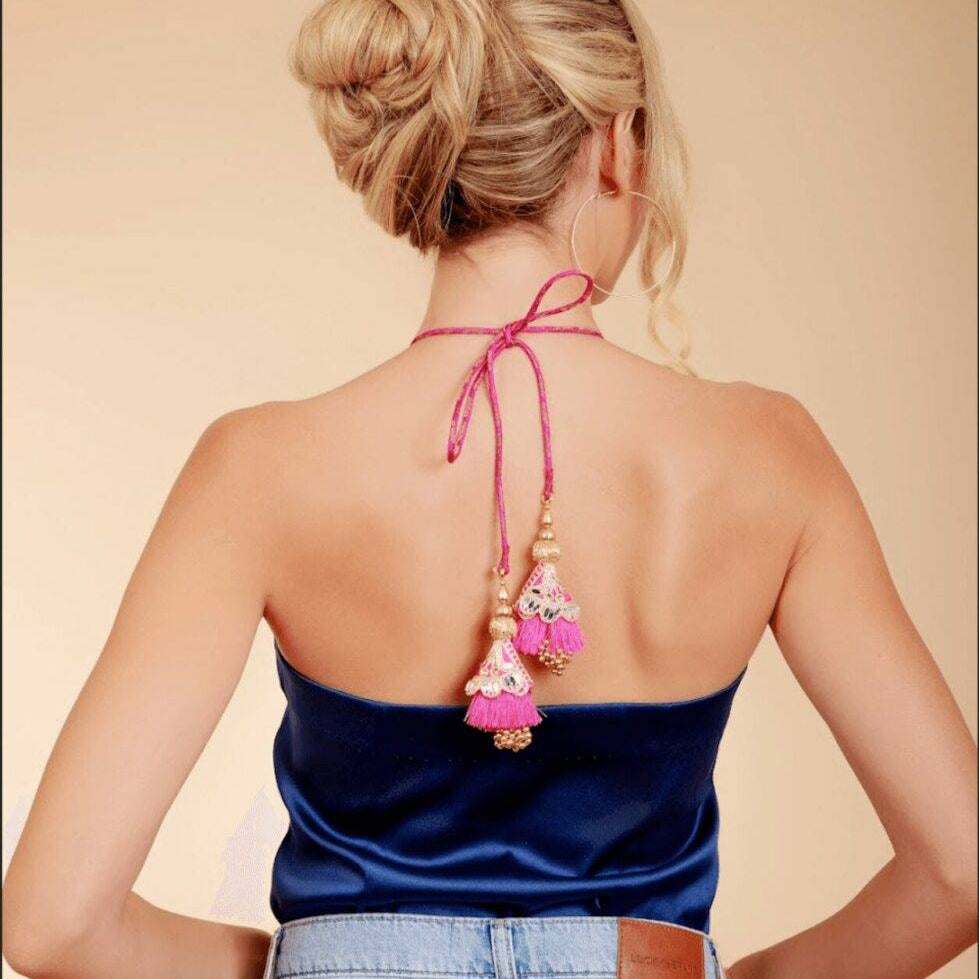
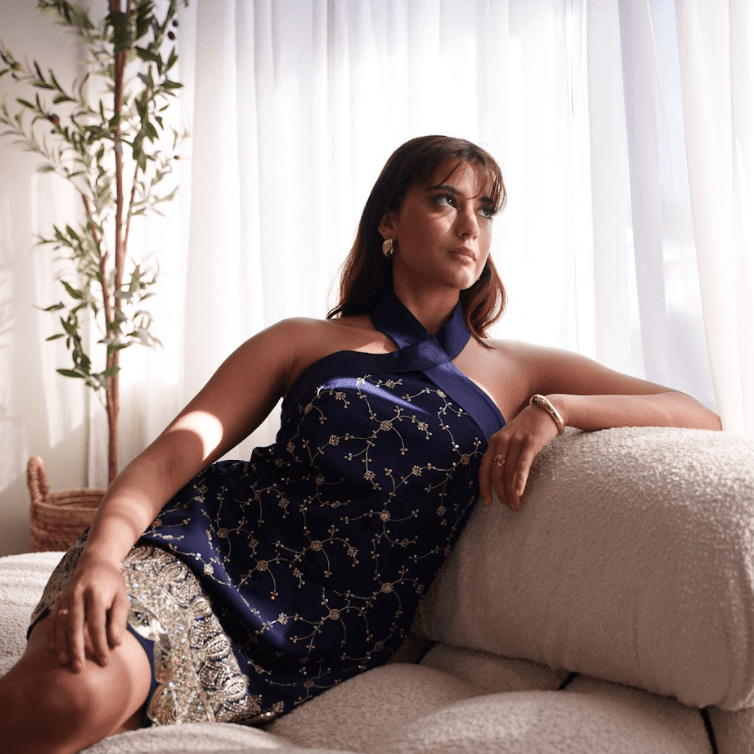
Embroidered borders along a hem, an asymmetric motif at the shoulder, a kurta-informed neckline, or a scarf-inspired drape panel — these are enough to carry a cultural story. The GWU Museum's Handmade exhibition illustrates how contemporary makers reinterpret South Asian techniques into modern garments by working detail into specific, considered placements rather than covering the full surface. La' Agra's Eclipse Dress applies the same restraint: hand-embroidery at the hem and a halter cut that needs nothing more.

Look for Fabrics and Handwork That Read Luxurious Up Close
Once you have a silhouette you love, the fabric and handwork are what separate a dress worth wearing for years from one that looks impressive on a hanger and little else. The two work together: a beautifully chosen fabric lets artisanal detail breathe, and thoughtful handwork gives even a simple weave a sense of occasion. According to La' Agra's fabric philosophy, the material itself carries as much responsibility as any embellishment, which means your first evaluation should happen before you even look at the embroidery.
-
Choose fabrics that move well and hold structure in equal measure. Silk satin, chiffon layers, and organza accents each have distinct qualities, and the weight of a silk fabric directly shapes how it flows, drapes, and holds over a long evening. Satin brings a polished surface, chiffon adds lightness, and organza offers just enough body to keep a silhouette from collapsing.
-
Treat hand embroidery as a quality marker, not just decoration. Techniques like zardozi and chikankari, documented in detail by the Victoria & Albert Museum, have centuries of craft behind them. What distinguishes genuine handwork from machine-applied ornament is the slight irregularity in stitch tension and the three-dimensional quality of the thread against the base cloth, as described in the V&A's illustrated embroidery guide.
-
Look for restraint, not density. A bordered hem, a single shoulder motif, or a textured panel placed with intention reads far more refined than all-over embellishment. Heavy ornamentation across the entire dress tends to compete with the silhouette rather than support it.
-
Check that the detail feels built into the design, not added on top. When embroidery placement follows the seam lines, neckline, or hem of the cut, it signals that the garment was designed as a whole. When it looks applied after the fact, the connection between craft and construction breaks down. La' Agra's textile approach is rooted in this principle, using heritage weaves and handwork as structural elements rather than surface finishing.
-
Examine the interior as carefully as the outside. Clean linings, finished seams, and even stitch tension on the reverse of embroidered sections are honest signals of how much care went into the making, as outlined in La' Agra's artisanal buying guide. A dress that holds up under that kind of scrutiny is one built to be worn, not just admired.
Match the Dress to the Occasion So You Wear It More Than Once
One of the strongest arguments for choosing a well-made fusion dress over a single-occasion piece is how far it can stretch across your social calendar. The features worth prioritising shift slightly depending on the setting, but when a dress is built around artisan-made design and thoughtful construction, the same piece can read as celebratory at a reception, polished at a dinner, and quietly distinctive at a city cocktail party.
|
Event |
La' Agra Dress Features to Prioritise |
Styling Add-Ons |
Overall Effect
|
|---|---|---|---|
|
Wedding Reception |
Hand-embroidered detail, fluid fabric with movement (silk blend, georgette, or chiffon), rich colour |
Statement earrings, embroidered clutch, heeled sandal |
Celebratory and heritage-rooted without being overdressed |
|
Cocktail Party |
Clean contemporary silhouette, one artisanal focal point (embroidered border or textured bodice), restrained palette |
Minimal gold jewellery, sleek heel or mule |
Refined and conversation-worthy without feeling occasion-specific |
|
Formal Dinner |
Structured or tailored cut, restrained embellishment, luxurious fabric with a quieter finish (satin or organza accent) |
Simple drop earrings, a slim clutch, understated shoe |
Sophisticated and polished, reading elegantly within non-Indian dress codes |
|
City Evening Celebration |
Versatile midi or column silhouette, subtle motif placement, comfortable construction for extended wear |
Layered delicate chains, block heel or ankle boot |
Contemporary and effortless, carrying heritage detail lightly |
What the best Indo-western dress fabrics share is not just drape and comfort — it is the quality of feeling designed rather than assembled. When craft is built into the construction rather than layered on top, the dress doesn't need restyling between occasions. The heritage detail shifts register with the room: quieter at a formal dinner, more present at a reception. That is what separates a dress that travels from one that stays home.

Indian Fusion Cocktail Dress FAQs Before You Buy
How much traditional detail is enough for a fusion dress to feel rooted rather than generic?
An Indian fusion cocktail dress reads as rooted when its South Asian detail is integrated—placed at a hem, neckline, or shoulder—rather than covering the full surface. A single embroidered border or a kurta-inspired neckline carries more cultural story than all-over embellishment. When the craftsmanship is genuine, you don't need much of it to feel the cultural weight.
What makes a fusion cocktail dress appropriate for non-Indian formal events?
A clean silhouette does most of the work. When the foundation is a contemporary cocktail shape and the South Asian detail is thoughtfully placed rather than all-over, the dress reads as refined eveningwear to any audience. Fashion psychologist Dr. Dawnn Karen, writing for TED Ideas, notes that intent and understanding of the cultural elements you're wearing matter deeply. Pieces where the artisanal detail is authentic and purposeful carry that assurance naturally.
Does the source of the embroidery or motifs actually matter?
It matters more than most buyers expect. WIPO's research on traditional cultural expressions in fashion shows that when heritage motifs are lifted without attribution or artisan involvement, both the cultural meaning and the garment's integrity are diminished. A dress made in genuine collaboration with South Asian artisans, using techniques passed down through generations, carries a different quality in the cloth itself.
Why is a La' Agra fusion cocktail dress a stronger choice for versatile wear?
La' Agra's Dresses collection is built around one principle: craftsmanship should shape the silhouette, not decorate it. Each piece is hand-embroidered, cut for modern movement, and designed to move between a wedding reception and a formal city dinner without any styling gymnastics. The artisan-led process means the heritage detail is always earned, never surface-level.
How do you care for a hand-embroidered fusion dress without damaging the detailing?
Gentle hand washing or dry cleaning is the standard approach for embroidered pieces. Storing the dress flat or on a padded hanger protects the embellishment from stress.
Choose the Dress You Can Rewear With Confidence
The dress worth choosing is the one that earns its place more than once — not because it is neutral enough to work anywhere, but because its craft is specific enough to feel right everywhere. When hand-embroidered South Asian detail follows the architecture of the cut, the result isn't a dress that manages to pass at a formal dinner — it is one that distinguishes itself there. The heritage is built in, not dressed up for the night.
La' Agra's Dresses collection is where that search ends: hand-embroidered pieces cut for modern movement, in fabrics chosen to hold through an evening and long past it. The brand's size guide and fitting tools are there when you're ready to make it yours. Find the piece that carries your story beautifully — and earns its place in your wardrobe for years to come.