By: Rekha Ananthanpillai
Last Updated: 8/5/26 - 20 min Read
Key Takeaways:
-
An Indo-Western dress becomes distinct when a modern silhouette carries South Asian craft through intentional drape, textile, embellishment, and finish rather than through trend-led mixing alone.
-
The strongest pieces use restraint: a hand-embroidered yoke, zari-inspired border, artisanal jacquard, or thoughtful motif placement can honour heritage more clearly than heavy ornament applied everywhere.
-
A well-made Indo-Western dress is designed for more than ceremony, and women of any background can wear it thoughtfully when they choose real craft, understand the garment’s origins, and style it with respect.
Pick up any fashion magazine covering South Asian style and 'Indo-Western' is doing a great deal of work. The same term gets applied to a kurta paired with jeans and to a heavily embroidered gown worn once to a wedding and carefully folded away. That blur has real consequences — because what you call a garment shapes how you value it, and whether you understand what it actually carries. As designers and fashion editors have noted, what defines an Indo-Western dress is not a trend formula. It becomes legible when you look at four things together: silhouette, drape, textile, and embellishment. When those elements carry South Asian visual codes within a shape built for modern wardrobes rather than ceremony alone, you have a contemporary garment where centuries of craft tradition and intentional design are in genuine conversation — something more considered, and more durable, than a mashup.
Understanding what an Indo-Western dress actually is matters, especially if you care about craft and cultural meaning. This piece walks through the design details that signal the category, explains how South Asian craftsmanship appears in contemporary silhouettes, and addresses how women of any background can wear these pieces with ease and respect. For those ready to see the style in practice, La' Agra offers artisan-crafted dresses where every one of those design choices is intentional.
The Design Elements That Make an Indo-Western Dress
What design elements make an Indo-Western dress feel both traditional and contemporary? The answer lives in the relationship between shape and detail. A dress earns that description when a Western-ready silhouette carries South Asian cues through specific, considered choices in embroidery, textile, drape, or trim.
Silhouette Does the Structural Work
The base shape is almost always Western in its construction: a slip, column, wrap, A-line, or shirt dress. What shifts the reading is what is placed on or within that shape. Indian textile traditions spanning over a millennium give designers a rich vocabulary of motifs, borders, and surface techniques to draw from. The silhouette makes the dress wearable; the heritage detail makes it meaningful.
Restraint Is a Design Choice, Not a Compromise
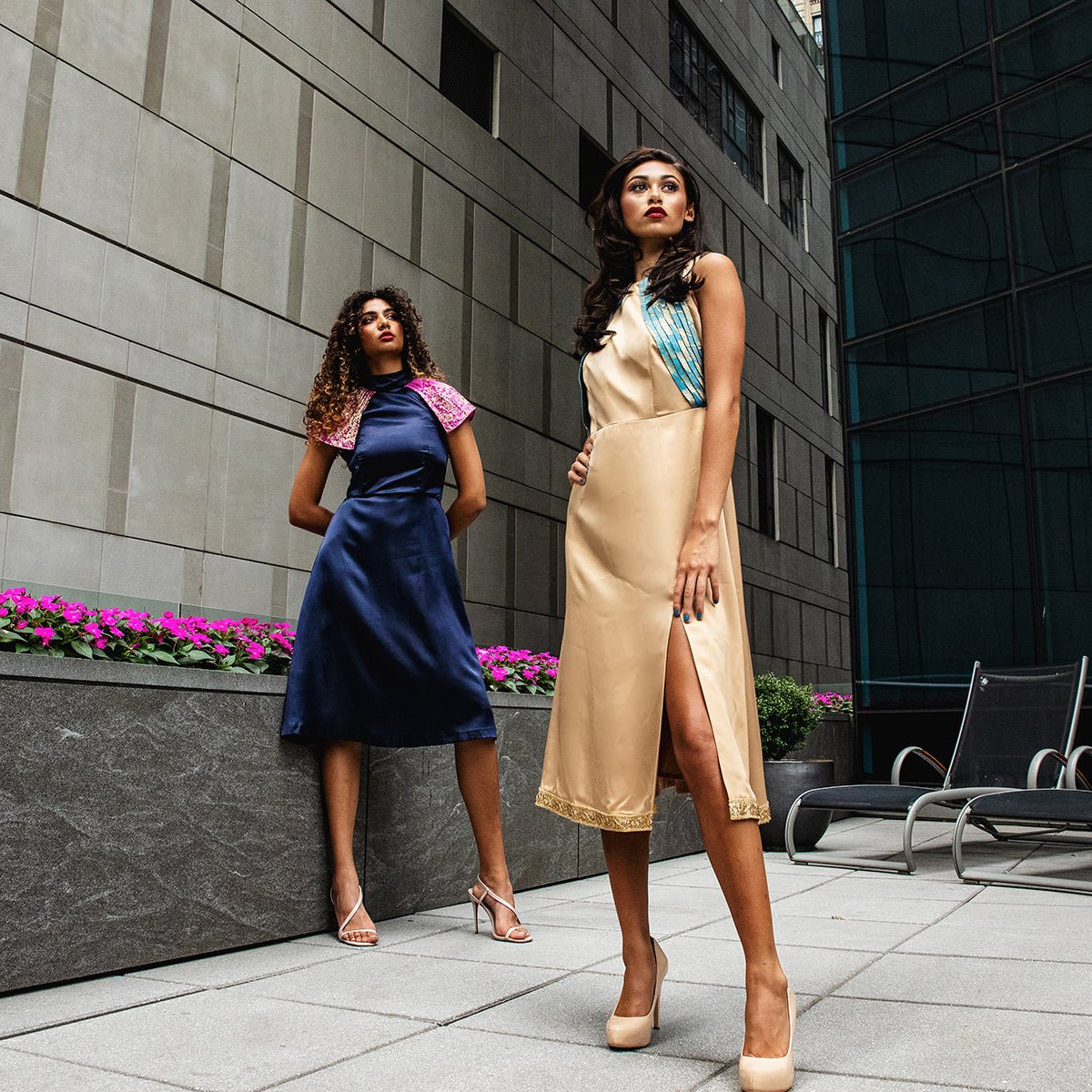
One or two heritage elements, placed with intention, carry more weight than a garment crowded with references. A brocade panel set into a column silhouette, a woven border along the hem, or a mirrored placket detail reads clearly — precisely because it is allowed to. Genuine handcraft, the kind that takes hours at a single neckline or cuff, does not need surface coverage to make its presence felt. Piling every available motif onto a dress turns the craft into backdrop rather than subject, and tips the garment toward costume. The art of fusion is, in large part, the art of knowing what to leave out.
Details Carry the Cultural Story
Floral motifs, asymmetric hemlines, cape overlays, bias cuts, and softened draping are the details that make an Indo-Western dress genuinely versatile. As Istituto Marangoni notes, floor-length capes and embroidered fusion pieces have become recognizable expressions of this language. These details give the dress its cultural coherence—and the versatility that follows.
How South Asian Craft Appears in Modern Silhouettes
The most common misconception about Indo-Western design is that heritage only shows up in ornate, layered pieces. In practice, South Asian craftsmanship appears in modern Indo-Western silhouettes and embellishments through precise, considered detail work placed within shapes that belong in a contemporary wardrobe. A minimal slip dress with a zari-inspired border at the hem, or a tailored column with an embroidered yoke, carries as much cultural depth as an elaborately adorned piece. The craft is doing quiet, purposeful work.
India's embroidery and textile traditions, from Lucknowi chikankari to Gujarati mirrorwork, each carry a distinct visual signature. When these techniques are placed thoughtfully within a modern cut rather than covering it entirely, the result is a garment that reads as refined rather than referential. As La' Agra's own design practice shows, mirrorwork and hand embroidery function as a visual language, not decoration, giving contemporary silhouettes weight and meaning that printed or machine-made fabric simply cannot replicate.
Here is where that craftsmanship actually lives in a finished dress:
-
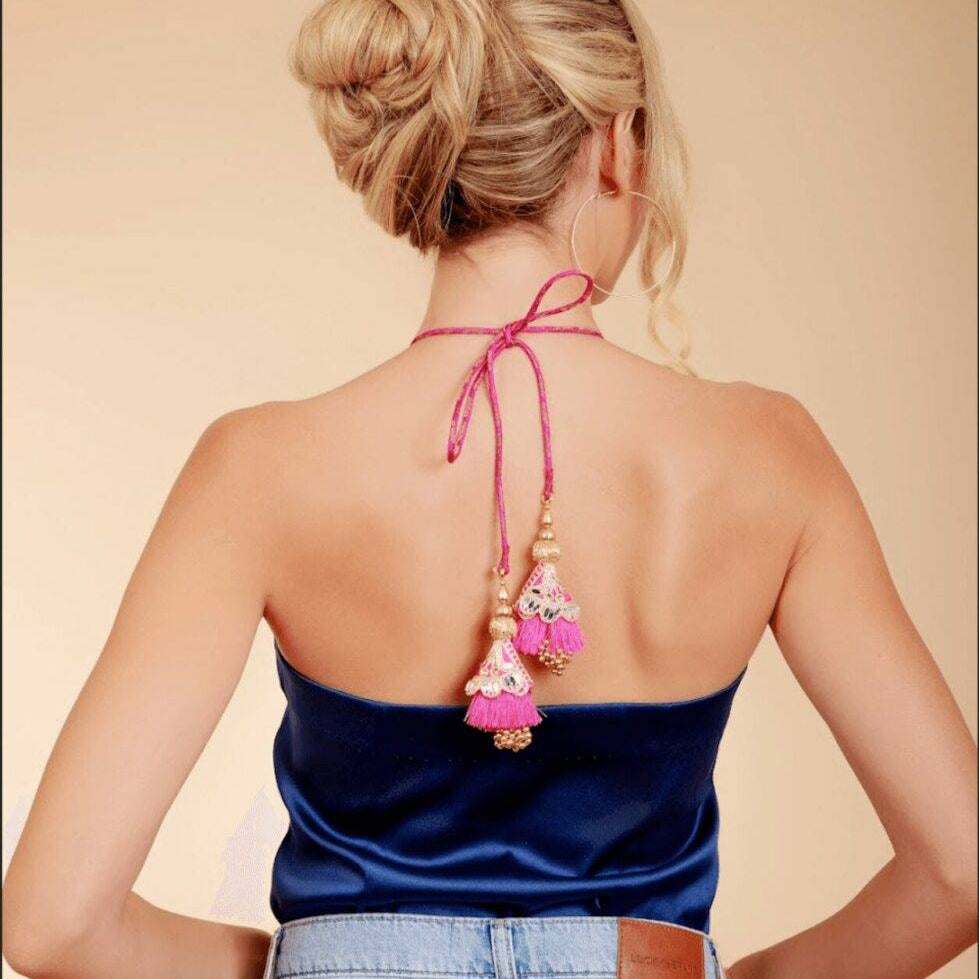
Hand embroidery and beadwork give a dress its most direct connection to South Asian textile heritage. Even a few hours of handwork along a neckline or cuff changes how a garment feels and sits, something artisans and designers have long understood.
-
Artisanal prints and jacquard textures carry motifs, botanical forms, and geometric patterns rooted in regional craft traditions into fabric that works with clean, modern tailoring.
-
Motif placement with intention matters as much as the motif itself. A border at the hem, an embroidered panel at the yoke, or a mirrored cluster at the cuff brings heritage into focus without overwhelming the silhouette.
-
Considered finishing, from hand-stitched edges to interior construction, signals that a garment was made with genuine craft attention rather than trend-led styling. This is where traditional embroidery moves from historical reference into storytelling that belongs in everyday wear.
-
Fabric choice and drape are often overlooked as craft signals. Fabrics that move with the body, hold embellishment without stiffening, and age well reflect the same philosophy of material respect that defines South Asian textile traditions.
La' Agra's dresses are built on exactly this logic. Each piece in the collection pairs a contemporary cut with heritage-led pattern and handworked detail, designed so the artistry lives in daily movement rather than only on formal occasions. The result is a dress that carries cultural depth without requiring the wearer to dress for ceremony to justify it.

How to Style an Indo-Western Dress Beyond One Occasion
An Indo-Western dress styled well for weddings and celebrations works just as well for a gallery dinner or a well-dressed weekday. The key is treating the dress as the anchor of an outfit, not the occasion as its only reason to exist.
At Weddings and Celebrations, Let the Dress Lead
When the garment carries hand embroidery or artisanal detail, the accessories should support it rather than compete. Sculptural earrings, a metallic sandal, and a clean clutch are enough. As La' Agra's spring wedding guest guide shows, restraint in styling is what lets the craft read clearly rather than disappear into a busy look.
For Dinners, Galleries, and Travel, Think Wardrobe Architecture
An Indo-Western dress earns its place in everyday dressing when it is layered like any other considered piece. A tailored jacket, minimal flats, or a soft draped shawl shift it out of ceremony and into the kind of considered dressing you'd reach for at a gallery opening or a long-haul trip. The V&A's work on Indian textiles makes clear that these fabric traditions were always built for daily life, not only display.
Versatility Comes From Design Integrity, Not Novelty
A well-made Indo-Western dress moves across settings because its design is coherent, not because it is trying to be multiple things at once. When silhouette, textile, and embellishment are working together, as La' Agra's heritage accessories guide illustrates, the result is a dress that fits different ages, aesthetics, and moments without losing its cultural clarity.
FAQ: Wearing an Indo-Western Dress With Respect
Questions about cultural respect and fashion often sit just beneath the surface for women who love South Asian-inspired design but want to wear it thoughtfully. These answers address the concerns that matter most to conscious, curious wearers.
Can women who are not of Indian heritage wear an Indo-Western dress with authenticity and respect?
Yes, with intention. Fashion psychologist Dawnn Karen's TED Ideas piece on cultural dress argues that wearing clothing from another culture respectfully means researching its origins and acknowledging what you're wearing. Choosing pieces where the craft is genuinely centered, rather than used as a surface trend, is the clearest way to do that.
What is the difference between an Indo-Western dress and traditional Indian dress?
Traditional Indian dress, such as a sari, lehenga, or salwar kameez, follows conventions of drape, construction, and regional meaning that have developed over centuries. An Indo-Western dress borrows design cues from those traditions, including motifs, embroidery, and textile choices, but places them within a contemporary silhouette built for modern wardrobes. One preserves an original form; the other reinterprets it. La' Agra's overview of the style explains this distinction clearly.
How can you tell whether an Indo-Western piece honours heritage instead of borrowing it superficially?
Look at where the craft lives. Pieces that honour heritage show real embroidery, considered motif placement, and fabric quality that reflects textile tradition. As NPR's reporting on cultural dress notes, intent and knowledge matter. A brand that names its techniques, credits its artisans, and produces in small batches is signalling genuine respect for the source.
Does wearing an Indo-Western dress require a personal connection to South Asian culture?
Not a personal connection, but a considered one. Healthline's guidance on cultural appropriation suggests asking whether a garment has been made accessible by the culture itself. Indo-Western as a design language has been shaped by South Asian designers, artisans, and wearers who have brought it into global fashion intentionally. Engaging with that story, rather than ignoring it, is what makes the difference.
Choose Indo-Western Dresses That Carry Meaning
An Indo-Western dress is only as meaningful as its details. When silhouette, textile, embellishment, and finish work together, the garment communicates something real. Many South Asian embroidery traditions carry regional identity and ritual history, as histories of Kantha, Kutch, and Phulkari embroidery show. Choosing a dress where that kind of craft is genuinely present, not decorative afterthought, is the difference between wearing heritage and referencing it.
Good construction is where that discernment begins. The Guardian's guide to garment quality points to seam finish, fabric hand, and considered detail placement as markers of real craft — the same qualities that signal genuine cultural engagement rather than surface borrowing. A dress built on those principles is one you can wear with understanding, not just admiration. La' Agra's artisan-crafted Indo-Western dresses pair hand-embroidered detail and luxurious fabrics with contemporary cuts designed to move with you across occasions and seasons. Discover the collection, and find the piece whose story you want to carry.